
Last month, a Maryland judge declared a mistrial in the case of Charles Smith, who was charged in connection with a 2023 mass shooting in Annapolis. The judge found that Assistant District Attorney Anne Colt Leitess mischaracterized evidence and blatantly disregarded the rules of evidence during the high-profile trial. Whether this was a deliberate choice or the byproduct of deficient trial skills—exacerbated by a culture of plea-driven mass adjudication that has almost completely displaced constitutionally prescribed jury trials—the result revealed an intolerable lack of due process for the defendant.
Thanks to prosecutorial misconduct, jurors’ time was wasted, justice for the victims and their families was put on hold, and the accused was denied his rights under our Constitution. What’s unusual about this case isn’t the prosecutorial misconduct itself, but that the trial judge stepped up to protect the rights of the accused.
Prosecutors are the most powerful—and least accountable—actors in our criminal justice system. In 1976, the Supreme Court, absent any legitimate authority, invented the doctrine of absolute prosecutorial immunity out of whole cloth. Absolute prosecutorial immunity ensures that prosecutors are never held liable when exercising their prosecutorial functions. This persistent lack of accountability has perpetuated injustice. It has denied victims and their families closure and undermined the rights of the accused, all while allowing violent offenders to walk scot-free.
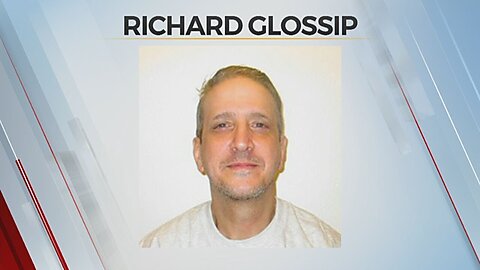
For a recent and vivid illustration, look no further than last month’s Supreme Court decision in Glossip v. Oklahoma. Due to prosecutorial misconduct, the Supreme Court overturned the capital murder conviction of Richard Glossip, who was convicted of murder in 1998 by an Oklahoma jury after he turned down a plea deal that would have spared him his life. After the Oklahoma Court of Criminal Appeals unanimously overturned Glossip’s first conviction due to weak evidence and ineffective assistance of counsel, a jury again convicted Glossip in 2004 of capital murder and sentenced him to death.

Concerns later arose regarding the reliability of witness testimony, centered around whether prosecutors had withheld crucial evidence. Glossip’s second conviction rested almost exclusively upon the testimony of Justin Sneed, who admitted committing the murder but claimed that Glossip had hired him. Prosecutors knew and failed to disclose to the defense that Sneed had been seeing a psychiatrist who diagnosed him with bipolar disorder and prescribed him lithium. When Sneed perjured himself on the witness stand, prosecutors failed to correct him. As a result, Glossip was convicted—not by the weight of evidence—but by the testimony of an unreliable witness.
The US Supreme Court held that prosecutors had violated their affirmative obligation to correct false testimony, which could have affected the jury’s decision and violated Glossip’s due process rights. While prosecutorial misconduct tainted the verdict, what happened here wasn’t particularly egregious—just run-of-the-mill, garden-variety prosecutorial misconduct. The prosecution didn’t fabricate evidence, as has occurred in other cases. Rather, prosecutors simply failed to live up to their constitutional obligations.
The knowledge that prosecutors will suffer no repercussions and that the system designed to hold them accountable will instead immunize them further perpetuates injustice. Prosecutors make concerted efforts to shield themselves from transparency and accountability—such that it’s nearly impossible to know whether they were ever investigated or subject to discipline. Nevertheless, Connie Smotherman, the lead prosecutor in Glossip’s case, is now a law professor at the University of Oklahoma. She is well-positioned to mold the minds and shape the careers of future generations of prosecutors.
This is the grim reality of our system, where those entrusted with the power to deprive us of our liberty—and even our lives—are shielded from accountability. Prosecutors’ offices, particularly the US Department of Justice, operate in a shroud of self-imposed secrecy. The publicity surrounding this case has led several University of Oklahoma School of Law alums to ask the dean to fire Smotherman. While it remains to be seen whether the dean acts on these demands, the mere fact that anyone has called Smotherman out is itself an anomaly. Typically, the individuals who swore an oath to uphold the law walk away unscathed, their careers intact, their reputations untarnished.